
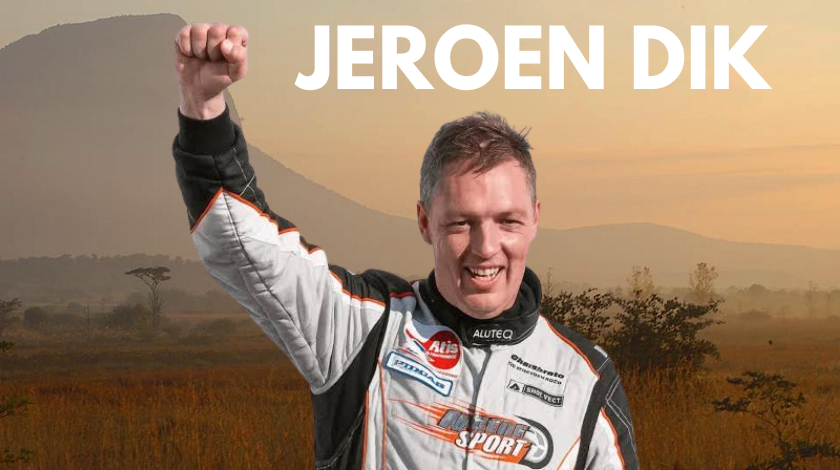
There are people in this world who stand right at the crossing point of two very different worlds, and Jeroen Dik is one of the most fascinating examples of that. He is not just a scientist, and he is not just an art lover. He is someone who has managed to combine the two in a way that has genuinely changed how we understand some of the most important paintings in human history. If you have ever heard about a hidden Van Gogh painting being discovered beneath another painting, there is a very good chance that the work of Jeroen Dik or the methods he helped pioneer played a role in that discovery. His work is the kind of thing that sounds almost too exciting to be real, yet it is completely grounded in careful, methodical science.
I first came across his name while reading about a news story on a hidden Van Gogh painting that was discovered under one of his known works. The story blew my mind. The idea that a painting could be hiding right underneath another painting, invisible to the naked eye, and that scientists could reveal it without even touching the canvas, felt like something from a movie. But it is real, and it is the kind of work that Jeroen Dik has dedicated a significant portion of his career to advancing.
Who Is Jeroen Dik?
Jeroen Dik is a Dutch scientist who works as a professor at Delft University of Technology in the Netherlands. His full professional title involves materials science, but his research goes far beyond test tubes and chemistry labs. He works directly with paintings, artworks, and cultural heritage objects, applying scientific tools and techniques to understand what lies beneath the surface of famous works of art.
What makes Jeroen Dik stand out is that he truly bridges two disciplines that might seem completely unrelated at first glance. On one side, you have the art world, which is deeply rooted in history, aesthetics, emotion, and cultural meaning. On the other side, you have materials science and analytical chemistry, which are about understanding how physical materials behave, what they are made of, and how they change over time. Jeroen Dik has spent years showing that these two worlds not only can talk to each other but that they need to.
His work has attracted attention from museums, art historians, conservators, and the general public alike. That is actually quite rare. Most scientific research stays within academic circles and never makes it into mainstream news. But when you are revealing a never-before-seen painting by Vincent van Gogh, people pay attention.
Education and Early Passion for Art and Science
Jeroen Dik studied at Delft University of Technology, one of the most respected technical universities in Europe. His background is rooted in materials science, which is the study of the structure, properties, and performance of materials. This might seem like a very industrial or engineering-focused field, and in many ways it is. But materials science is also deeply relevant to art, because paintings are, at their core, physical materials. The canvas, the paint layers, the varnish, the pigments, all of these are materials that can be analyzed, measured, and studied.
His interest in applying this science to artworks appears to have developed over time through a combination of professional curiosity and genuine passion for cultural heritage. What he has built over the years is a research program that uses some of the most advanced scientific tools available anywhere in the world to look at artworks in ways that were simply not possible a few decades ago.
His Role at Delft University of Technology
At Delft University of Technology, Jeroen Dik holds a position in the faculty of applied sciences, specifically within the department of materials science and engineering. His research group works on what is broadly called technical art history, which is a growing academic discipline that combines art history with scientific analysis of artworks.
Technical art history is not just about identifying what paint was used or whether a canvas is the right age. It is about understanding how an artist worked, what choices they made, what materials were available to them at the time, and sometimes, what they changed their minds about along the way. When an artist paints over part of a composition, or when they reuse a canvas, the older image is still there underneath. Scientific imaging can reveal it, and that information can completely transform our understanding of an artist’s creative process.
Dik has also been involved in building and using some incredibly advanced scientific instruments. His collaboration with synchrotron facilities, which are large scientific machines that produce extremely intense beams of X-rays, has allowed his team to analyze paintings at a level of detail that was previously impossible. The kind of X-ray imaging he does is not like a medical X-ray at a hospital. It is far more sophisticated, far more detailed, and specifically designed to map the chemical composition of paint layers across an entire painting surface.
The Science Behind the Magic: MA-XRF Scanning Explained
One of the key tools in Jeroen Dik’s research is called Macro X-ray Fluorescence scanning, which is usually shortened to MA-XRF. This is a technique that sounds complicated but is actually quite logical once you break it down.
When you shine a beam of X-rays onto a material, the atoms in that material absorb the energy and then release it again as secondary X-rays. Each chemical element releases X-rays at a specific energy level, like a fingerprint. By scanning a beam of X-rays across the entire surface of a painting and measuring what comes back, scientists can create a detailed map of which chemical elements are present, and where. Different pigments contain different chemical elements. Lead white, for example, contains lead. Vermillion contains mercury. Cobalt blue contains cobalt. By mapping these elements across a painting, researchers can figure out which pigments are present in each area, even in layers that are buried beneath the surface.
What is particularly powerful about this approach is that it is completely non-invasive. The painting is not touched, no samples are taken, nothing is removed. The artwork is left completely intact, which is absolutely essential when you are dealing with priceless cultural treasures. This was something that really struck me when I learned about it. The idea that you can learn so much about a painting without ever touching it, without causing any damage, feels both scientifically brilliant and deeply respectful of the artworks themselves.
The Van Gogh Discovery That Made Headlines
One of the most famous moments in Jeroen Dik’s career came when his team revealed a hidden painting by Vincent van Gogh. The discovery involved a canvas on which Van Gogh had painted a known work, but beneath that painting was an entirely different composition that had never been seen before.
Using MA-XRF scanning, Dik’s team was able to map the hidden image in extraordinary detail, revealing a peasant woman’s face that Van Gogh had painted over before creating the visible image on the canvas. This was not just a vague outline or a blurry shadow. The scientific imaging produced a clear and detailed picture of the hidden composition, giving art historians and the public their first look at a Van Gogh painting that had been hidden for well over a century.
The reaction to this discovery was enormous. News outlets around the world covered the story. Museums took notice. And it sparked a broader conversation about how many other hidden paintings might be out there, sitting inside museum collections, hidden beneath the surfaces of works we have been looking at for years without knowing what lies underneath.
This is what makes Jeroen Dik’s work so compelling. It is not abstract science for its own sake. It connects directly to human stories, to the creative lives of artists we love, and to cultural heritage that belongs to all of us.
Collaborations with Museums and Cultural Institutions
Jeroen Dik and his research group have worked with some of the most prestigious museums in the world. The Van Gogh Museum in Amsterdam has been a key partner. The Mauritshuis, also in the Netherlands, has collaborated with his team on the study of Dutch Golden Age paintings. Various other institutions across Europe have engaged with his research.
These collaborations work well for both sides. Museums get access to cutting-edge scientific tools and expertise that most institutions simply cannot maintain on their own. Scientists like Dik get access to remarkable artworks and the opportunity to conduct research that has both academic value and genuine public interest. It is a partnership that genuinely benefits the field of art conservation and historical understanding.
What I find particularly admirable about this aspect of his work is that it is not kept locked away in academic journals that only specialists read. The discoveries that come from these collaborations tend to be shared publicly, through exhibitions, press releases, and media coverage. That openness helps bring science closer to ordinary people who may never have thought about what goes on behind the scenes in a museum conservation lab.
Why Non-Invasive Research Matters So Much
Before the development of techniques like MA-XRF, researchers who wanted to understand the materials in a painting often had to take physical samples. That means carefully removing tiny pieces of paint from the artwork, which is obviously a destructive process, even when it is done carefully and with only the smallest possible samples. For very valuable or fragile works, this was not always possible or ethical.
Non-invasive imaging changed everything. Now researchers can get detailed information about the composition of a painting without touching it at all. This has opened up the study of artworks that previously could not be analyzed, and it has allowed researchers to study entire painting surfaces rather than just tiny sampled areas.
Jeroen Dik has been one of the driving forces in developing and refining these non-invasive approaches, and his work has helped establish them as standard tools in the field of technical art history and conservation science. That is a legacy that will benefit art research for decades to come.
Impact on Art Authentication and Forgery Detection
One area where this kind of scientific research has enormous practical implications is art authentication. The art market deals with enormous sums of money, and questions about whether a painting is genuinely by the hand of a famous artist or is actually a later copy or outright forgery are critically important.
Scientific analysis can help answer these questions in ways that visual inspection alone simply cannot. If a painting is supposed to be from the 17th century but the pigment analysis reveals chemical compounds that were not invented until the 20th century, that is a very strong indicator that something is not right. Conversely, if the materials all check out and are consistent with what an artist was known to use at a particular point in their career, that adds a significant layer of evidence to support authenticity.
Jeroen Dik’s work contributes to this field even when it is not directly focused on authentication, because the broader scientific understanding he develops about how Old Masters worked, what materials they used, and how their techniques evolved over time creates a rich body of reference knowledge that authentication experts can draw on.
The Future of Art Science
The field that Jeroen Dik has helped shape is still growing rapidly. New imaging technologies continue to be developed. Machine learning and artificial intelligence are beginning to be applied to the enormous datasets that scanning techniques like MA-XRF generate, making it possible to extract even more information from the data. Portable versions of scientific instruments that previously could only be used in labs are now being developed, which means that artworks that cannot easily be moved can be studied in place.
It seems very likely that the coming years will bring even more remarkable discoveries, more hidden paintings revealed, more mysteries solved, and a deeper understanding of how the artists we admire actually worked. Jeroen Dik will almost certainly be part of that future, whether directly or through the students and researchers who have been trained in the methods his group has developed.
Conclusion
Jeroen Dik is not a household name the way Van Gogh or Rembrandt are, but he deserves to be far better known than he is. His work represents something genuinely special: a scientific mind applied to questions that matter deeply to culture, history, and our shared human story. By using tools like MA-XRF scanning and synchrotron imaging to peer beneath the surfaces of famous paintings, he has changed what we know about some of the greatest artists who ever lived, and he has done it without causing any harm to the artworks themselves.
For anyone who loves art, science, or the intersection of the two, Jeroen Dik’s work is an inspiring example of what curiosity, expertise, and careful research can achieve. The hidden paintings he has helped reveal are not just scientific curiosities. They are windows into the minds of artists who have been gone for centuries, and they remind us that there is always more to discover, even in things we thought we already knew.
Frequently Asked Questions (FAQ)
Q1: Who is Jeroen Dik?
Jeroen Dik is a Dutch materials scientist and professor at Delft University of Technology in the Netherlands. He specializes in applying scientific imaging techniques to the study of artworks and cultural heritage objects.
Q2: What is Jeroen Dik famous for?
He is best known for his work in revealing hidden paintings beneath the visible surfaces of famous artworks, most notably uncovering a hidden Van Gogh painting using X-ray fluorescence scanning technology.
Q3: What is MA-XRF scanning?
MA-XRF stands for Macro X-ray Fluorescence scanning. It is a technique that uses a beam of X-rays to map the chemical composition of a painting surface, allowing researchers to identify pigments and reveal hidden layers without touching or damaging the artwork.
Q4: Is Jeroen Dik’s work non-invasive?
Yes. One of the defining features of his research approach is that it is entirely non-invasive. No samples are taken from the artworks, and no damage is caused during analysis.
Q5: Which museums has Jeroen Dik worked with?
He has collaborated with several major institutions including the Van Gogh Museum in Amsterdam and the Mauritshuis, among others.
Q6: How does this research help art authentication?
By analyzing the materials and pigments in a painting, scientists can determine whether they are consistent with the period and style of the claimed artist, which provides important evidence in authentication discussions.
Q7: What university does Jeroen Dik work at?
He is a professor at Delft University of Technology in the Netherlands.